home login downloads videos
ADDS - METARs form results Aviation Digital Data Service (ADDS) Output produced by METARs form (1050 UTC 09 September 2010) found at http://aviationweather.gov/adds/metars/index.php  RPLC 091000Z 00000KT 9999 FEW036 SCT100 OVC270 27/24 Q1010 A2985 RMK NOSIG RPLC 091100Z 0912/1012 23006KT 9999 SCT036 BKN100 TX31/1006Z TN25/0921Z TEMPO 0912/0918 VRB08G25KT 6000 -TSSHRA/-RA FEW020CB SCT030 OVC090
   
INQUIRY
AIRPLANES
FAQs


Frequently Asked Questions

1.  Do you have a fixed schedule for flight training and ground schooling? - We offer flexible flight training and ground school schedules, we can schedule these around your free time, we conduct one-on-one instruction at no extra cost.

2.  How long does the Private Pilot training take? - Realistically, you can complete the flight and ground training in one to two months. (flight & ground training, application, and processing of documents, etc.).  This is assuming good weather and continuous training.  During the rainy season it's pretty normal to encounter delays due to weather.  

The training program is based on the MINIMUM number of flying hours required by the Air Transportation Office (ATO).  Actual hours may exceed the minimum depending on student performance.  Excess hours shall be charged according to aircraft hourly rate.

3.  Do you allow your students to fly solo? - Once you are checked out and released by the instructor, you can fly solo local and cross-country flights.  We believe being able to fly solo builds confidence and encourages learning.  No baby-sitting safety pilot!

4.  Do you need to use a parachute? - NO, light planes have good glide performance.  In the unlikely event of an engine failure, the plane can still glide--rest assured it won't fall like a rock.  To give you an idea, from 10,000 ft. a Cessna 152 can still glide a good 15 miles.  Simulated engine failures are included in your flight training.

5.  Are light planes safe? - YES, in fact the popular Cessna 172 has been considered the safest light single in the United States.   http://www.aopa.org/asf/publications/cessna_skyhawk.pdf   

6.  What are the advantages of training at Omni? 

  • We have our own private runway.  No need to contend with the air traffic at Manila, you can be up and flying in 10 minutes.  You can do touch and go's to your heart's content!  
  • Build your skill at our "challenging" runway. If you can land at OMNI... you can land ANYWHERE!
  • The training areas are situated five minutes away from Omni.
  • Central Luzon presents the best training area, wide expanse of flat land with little obstructions.
  • Close proximity to Clark International Airport.  
  • You have the well established reputation of Omni Aviation, full transparency and best value for your money. 

7.  How do I get to Omni from Manila? - If you have your own vehicle, you can take the Dau exit from the North Expressway.   From Dau proceed to the Clark Special Economic Zone main gate (2-3 kms from Dau), once inside Clark we are just 3kms. from the gate (right side of Manuel Roxas highway).

Commuting?  Take either Victory Liner or Five Star to Dau.  Once in Dau, ride gray jeep to Clark main gate.  Once at main gate, there is a jeepney terminal inside, take any jeep (reverse or regular) for Omni.

8.  What is the year-round weather at Clark like?  What's the best time to schedule flight training? - Our rainy season is from June to late September, from October to May expect fairly good weather for flight training.  We can still accommodate you during the rainy season, but be prepared to encounter delays due to weather.  You can contact us ahead of time and we can give you the weather trend for the week.

9.  Is the Philippine license recognized in other countries? - Yes, the Philippine license is recognized in any International Civil Aviation Organization (ICAO) member country (i.e. US, Australia, Japan, etc.).  The conversion process varies from country to country.  For a list of ICAO-member countries go to http://www.icao.int/icao/en/members.htm.

10.  How much does the Private and Commercial Pilot Training Cost and other course packages you offer?  Please download the files from the website for the complete course packages that we offer.

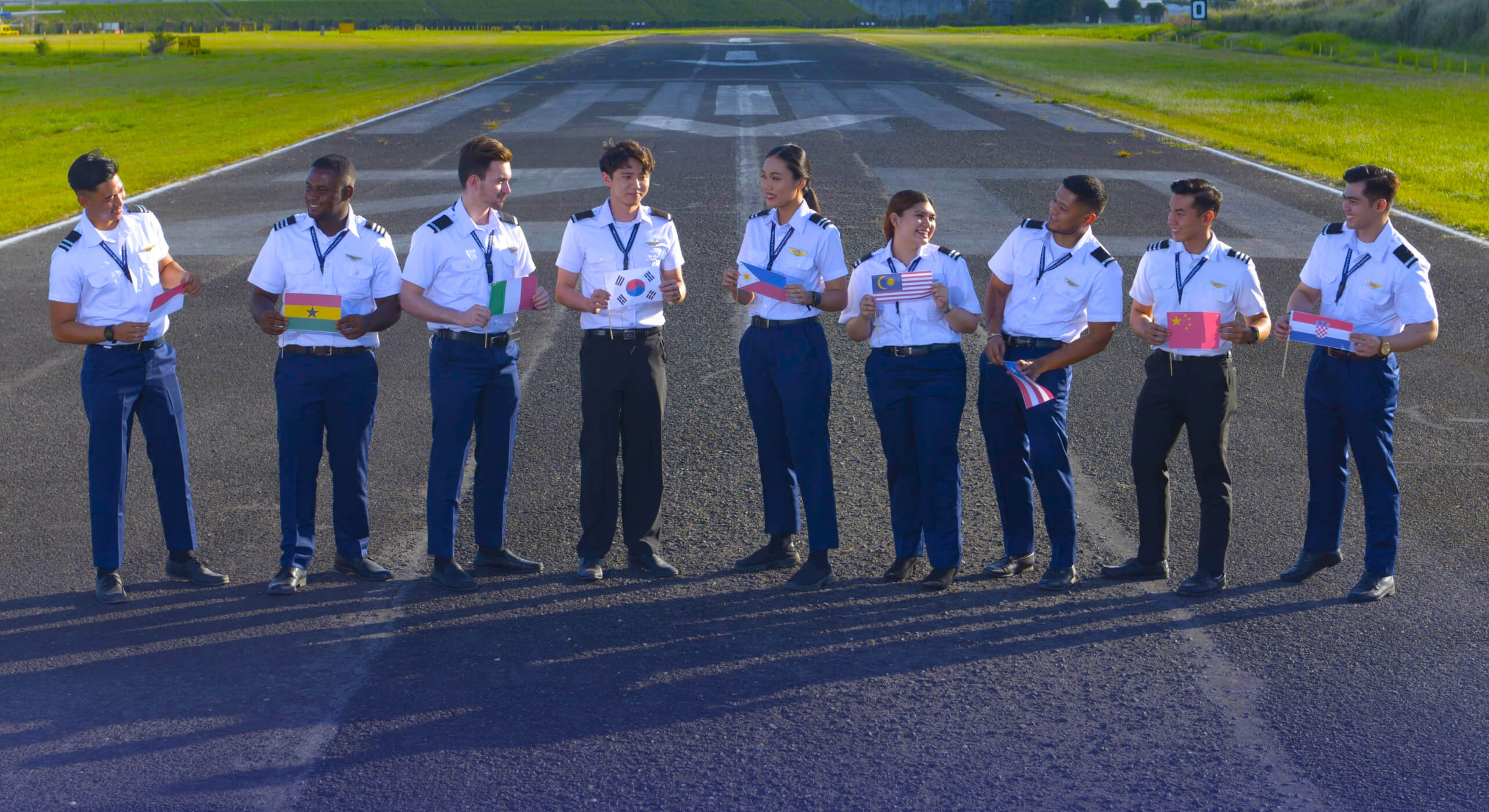
11.  What are the requirements for Foreign Students to fly in the Philippines? 

  • Be at least 16 yrs old to get a Student Pilot's License.
  • Read, speak, & understand English. 
  • National Bureau of Investigation (NBI) Clearance.                              
  • Check out http://www.nbi.doj.gov.ph/ for more info.
  • Immigration Clearance
  • X-Ray & ECG (submit at Air Transportation Office)
  • Medical Exam (ATO honors FAA medical)
  • Notarized Application Form
  • ID Pictures (2x2 & 1x1 white background, white polo shirt or preferably pilot's uniform).
  • Payment of corresponding fees.

Note: We have staff available to assist you.

12.  What are the requirements for Philippine citizens to fly?

  • Be at least 16 yrs old to get a Student Pilot's License.
  • Read, speak, & understand English.
  • NBI Clearance.  Check out http://www.nbi.doj.gov.ph/ for more info. 
  • X-Ray & ECG (submit at Air Transportation Office)
  • Medical Exam (ATO honors FAA medical)
  • Notarized Application Form
  • ID Pictures (2x2 & 1x1 white background, white polo shirt or preferably pilot's uniform).
  • Payment of corresponding fees.

Note: We have staff available to assist you.

13.  Are you open on holidays? - We are open 7 days a week, 365 days a year.  

WEATHER
PAG-ASA
Wunderground
NOAA
TAFs METARs
Angeles City Weather
weather.noaa.gov
   
© All Rights Reserved OmniAviation